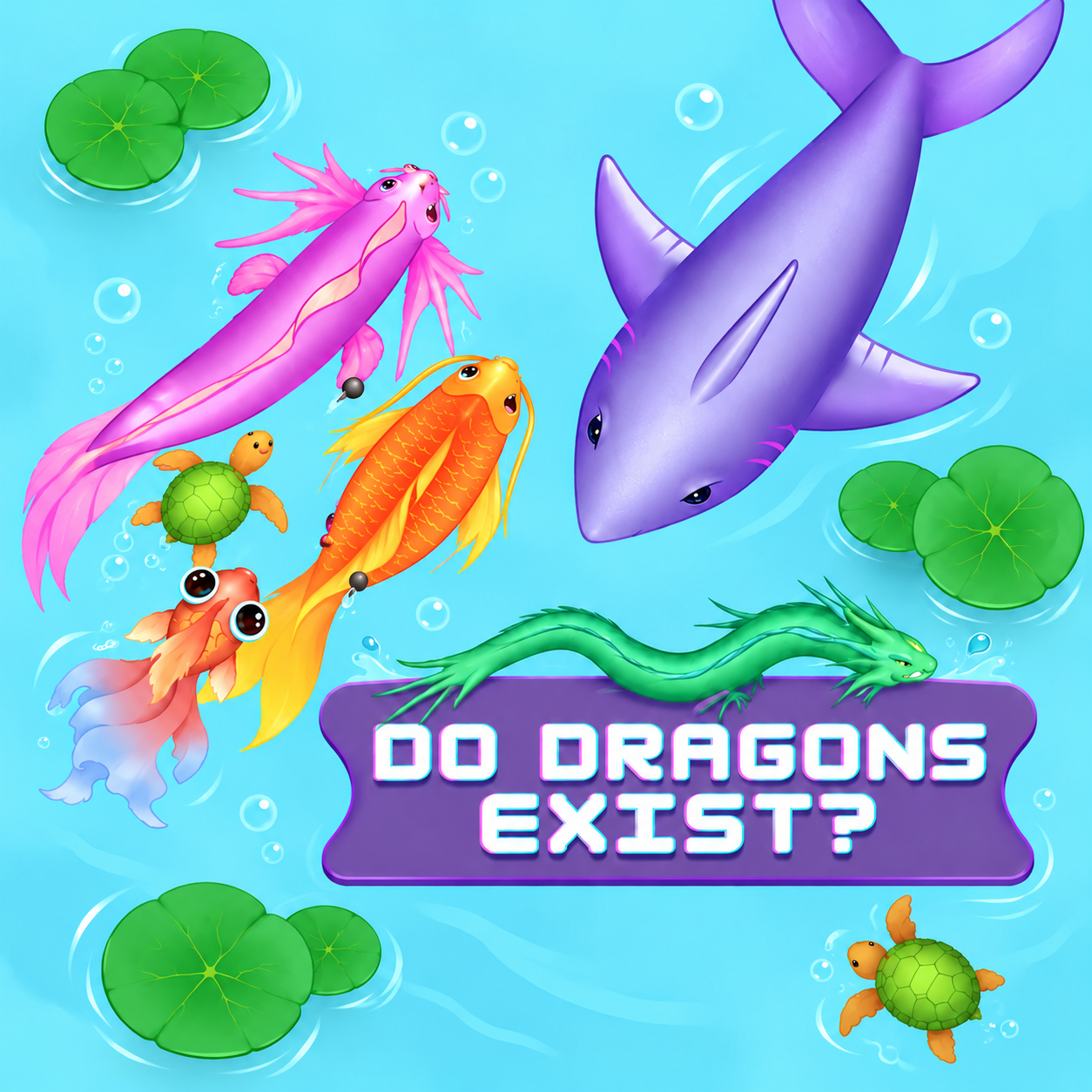
Do Dragons Exist
Do Dragons Exist Mods Game
Goat Rampage

Tower Rise

Horror Nun 2

Sprunki Square Shifted

Obby Survive Parkour

Bees Empire Clicker

Paint Or Hunt

Super Bear Adventure
Brave Squad

Sprunki Hyper Shifted Phase 3 Remastered

Left Or Right Spranki Beats

1 Speed Keyboard Lucky Escape

Traffic Racing

Rider Rush

Sprunki Phase 9 Ggtp

Rooster Road

Please Do Not Feed The Sprunki Brud

Endacopia

Basketball Hit

Flying Car Game Police Games









How To Play Do Dragons Exist
Do Dragons Exist? In this water-based strategy game, that question is less central than the need to manage a growing pack. Gameplay centers on controlling a collection of aquatic creatures within a watery environment. At the start, the player has exactly one tadpole under their control. Over time, the group expands, adding new members and evolving. The primary activity is movement: the pack must be guided toward creatures that are safe to approach and steered clear of larger hunters. The controls are intentionally limited. With a mouse, players click and hold, then drag to indicate a new direction; on a touchscreen, they press the screen and drag to move the pack. Because the control scheme is straightforward, the strategic layer becomes the main source of challenge, instead of complex button input.
The central mechanic is collection and merging. When the pack contains three creatures of the same type, they fuse automatically into a single larger and stronger species. This is the only path to evolution. Therefore, players must identify animals that match the current members. Gathering random creatures may still increase the size of the pack, but finishing matching groups offers the fastest route to evolutionary progress. The game encourages careful targeting rather than indiscriminate consumption. After further evolutions are reached, the hierarchy within the environment shifts. Animals that might once have been dangers can become plausible prey, while new and larger predators appear. This ever-changing situation obliges players to continually reassess obstacles and openings.
Survival is not just about evolving. Larger animals can eat pack members without any warning, so chasing every nearby creature is a dangerous strategy. The player must keep moving, maintain enough space to escape against more powerful opponents, and protect pairs that need only one more match. Losing a single animal does not end the run; the game continues until the whole pack has been consumed. As a result, smaller companions serve as temporary protection or sacrifices, but too many casualties will slow evolution. The game ultimately balances the murderer aggression and caution by forcing players to decide exactly when to pursue a target and when to fall back.
Do Dragons Exist Wiki
Do Dragons Exist: A Comprehensive Introduction
Summary
Do Dragons Exist presents a marine-based evolution experience developed by HolaStudio, placing participants into an underwater environment where survival and movement are closely connected. Beginning as a relatively insignificant larval creature, the player has to maneuver through a intricate feeding structure, where each being serves as both a possible target and a possible threat. Everything leads toward the primary objective: rising through multiple levels by obtaining animals, merging duplicate specimens, and ultimately transforming into a robust dragon. This game integrates active movement, case-by-case threat assessment, and steady, sustained progression. It is not an intense combat-based title but rather a methodical endurance challenge in which waiting and clear perception become essential qualities. The guiding principle behind the entire experience is simple—consume or be consumed—but the mechanics demand deliberate and calculated choices. The appeal of this title lies in its smooth mechanics and the fulfilling sensation of evolving from a feeble tadpole into a supreme aquatic hunter. It is aimed at audiences who appreciate insect-like nature evolution games and are looking for an uncomplicated yet gradually demanding investment.
Key Features
This game is characterized by multiple distinctive attributes that set it apart throughout the animal-oriented evolution category.
Initially, the level up system is clear yet highly satisfying. The fundamental rule that three similar organisms must merge together to form a more powerful type is easy to learn, yet still adds worthy strategic dimensions. Each player needs to keep track of which entities are already in the collection and which are still missing. This encourages focused play and assigns additional intention to every single interaction.
Later, the food relationship hierarchy is constantly shifting. The in-game environment is not fixed. When the player's group grows sufficiently, the general power state changes accordingly. Formerly terrifying threats become easy victims, while completely different challenges start to appear. This continuous state of change makes each play session unpredictable and keeps the gamer exceptionally alert and capable of adjusting. Observable advancement is strong: an animal that made perfect sense could later be just a food.
Another element, the ability to manage a general pack, introduces a whole separate difficulty level. Since the adventure remains until your entire pack has been eaten, losing a few individuals does not end the run at the moment. This enables confident sacrifice as a strategy. Gamers are allowed to deploy some smaller and less crucial pieces as barriers, giving protection for the more specialized units. Yet if this tactic is used too much, evolution can stop forwarding. This creates an interesting tension between fast emergency repair and larger achieving growth over time.
The control mechanics are also particularly easy to master. The drag-to-move approach for promoting movement is effective on both personal computers and portable devices. Given that there are no complex presses, anyone can jump into play without friction—but the true depth comes from the many choices the gameplay presents. This openness makes the game automatically approachable and easy to learn, clears up room for observing evolution rather than prompting the controls.
Fifth, the visual and stylistic presentation of this product is clean and purposeful. The aquatic underwater level is perfectly fitted for the initial state of a tadepole, and the gradual transformation into a full dragon is in harmony with the internal logic of the game. The draws of each creature are recognizable enough that players can immediately identify types of species and compare which ones are more dangerous.
Finally the project embraces a highly compelling cycle: swim, collect, mix, survive, and evolve to the next stage. Each single run gives a unique new opportunity to optimize your chosen something. When those real-time actions are combined with steady growing progress, it becomes an pleasant way for lovers of growth-oriented games.
Precautions/Tips
For contemporary players of Do Dragons to achieve, a deliberate tactical attitude is needed rather than chasing every animal that appears.
-
First, value matching above all. The final answer to earlier evolution is to group equal grouping. Collecting animals without methodical aim may temporarily enlarge your pack size it stays permanently. Before you set out to capture a new specimen, examine if you already have at least two of that kind. If the group doesn't match, assess whether the route is actually necessary.
-
Two, stay away from unnecessary dangers. Larger hunters are able to eliminate your pack members suddenly, and a loss not only reduces numbers but also slows progress. For this reason, a competent play experience is to simply pass on dangerous targets that may place an more valuable hazard. Patience becomes more important in this sense. Let some time pass and search for safer moments.
-
Third, always keep a route for exit from spaces. Nodes along distance from what could eat you can give you breathing space needed to escape. Being surrounded by predator positions usually causes severe losses. Continually be mindful of the safest path to move out in current scene. Regular movement can keep you from being enclosed in a corner.
-
Fourth, shield incomplete pairs. If two same-looking animals stand one step away from a merge, treat them as irreplaceable assets. Do not bring them into high-risk or mixed areas. Given that they are necessary reduce evolution, losing them is the biggest mistake. A cardinal rule: sacrificing a pair for a minor benefit rarely ever pays out.
-
Fifth, use those tiny allies wisely. Remember that failure only occurs once the whole herd is gone, so smaller units can be used as protective bait. They are likely to be eaten first in danger, which provides you extra response to get away with your rare creatures. Still, if you rely on such sacrifices too often, your pack will not turn into huge, and development stops. Reserve this means for very important situations.
-
Sixth, be aware of the way the food web shifts. The animal groups become tougher on each evolution, so their environment may now have changed. After every consolidation, reassess the world. A hunter from the previous level might now be lvable. There may even be majorly larger enemies then containing some. Stay aware at all times and keep an updated database of which zones are instantly known.
-
Seventh, improve your use of the control system. Although the drag-to-move is basic, it is very important to have smooth, exact commands. Keep away from erratic movements that pull your creatures toward accidents. Guide the group in a continuous, controlled fashion. On a touchscreen, avoid blockviews or covering your group.
-
Eighth, don't catch each object that picks your interest. The game results that focuses dedicated effort becomes needed. If a goal lies in predator territory, the possible losses often can be overall larger. Just walk away. More animals will show up constantly, and opportunities not still lost once.
-
Ninth, keep swimming in the water. A pack that stops is simply open prey. Not only does noticing predators improve survival, but moving covers ground and reveals units that match. Use dynamic movement as being a discovery mechanism as much as a means of protection.
-
Tenth, having enough time is essential. Do not expect giant leap to the end. Focus on aporulated benefits from each stage and try to learn not repeated via setup. This game focuses equally on mindful decision and response. With careful discipline, strategy, you possibility of reaching the dragon stage becomes a real objective.
In conclusion, Do Dragons Exist is indeed a thoughtfully designed simulation that rewards a tactical mindset and training along the realm of managing threats. By studying for example what exactly makes a matching of species, respecting the hunter chain, and wisely supervises pack members, players can lead their creatures upward from slender beginning all the way to legendary apex status. The game is welcoming to everyone new to the genre filtered but provides sufficient nuance for seasoned participants to remain fascinated. Approach any attempt with clever patience, and the formidable dragon will be in sight eventually.
Do Dragons Exist Frequently Asked Questions
Q: What exactly is the game called Do Dragons Exist?
A: Do Dragons Exist is an animal evolution game created by HolaStudio.
Q: How does the opening of Do Dragons Exist unfold?
A: You start as a tiny tadpole, and your immediate task is to survive long enough to advance to a higher position within the food chain.
Q: What is the core objective in Do Dragons Exist?
A: The main goal is to continue evolving your pack until it finally spawns a powerful dragon.
Q: What is the system that drives evolution in Do Dragons Exist?
A: When you have three creatures of the same type within your group, they automatically combine to form a larger and stronger species.
Q: What is the quickest route to evolution?
A: Finishing matching sets is the most rapid strategy. Gathering random animals may expand your number, but that approach does not accelerate your evolution at the same speed.
Q: How should you handle encounters with larger predators in Do Dragons Exist?
A: Larger animals can devour individual members of your pack, so you should continually stay on the move and allow for sufficient space to escape, while also protecting pairs that are only one matching member away from merging.
Q: Does losing a single animal bring the run to an end?
A: No. The session goes on until your entire group has been eaten.
Q: Are smaller creatures still necessary?
A: Yes, small allies can offer moment-based defense, but sacrificing an excessive amount of them can significantly slow down your evolution.
Q: Can formerly threatening animals eventually become prey?
A: Yes. As your creatures gain power, previously hazardous species can turn into reliable targets.
Q: What are the mouse control commands used in Do Dragons Exist?
A: Click and hold the mouse button, then drag the cursor to establish a new direction.
Q: What are the touchscreen control commands used in Do Dragons Exist?
A: Use your finger to press and drag on the display, guiding the pack wherever you intend it to go.
Q: Where does the action in Do Dragons Exist unfold?
A: The gameplay occurs in water regions, and you must explore those surroundings while collecting animals that are safe enough to approach.