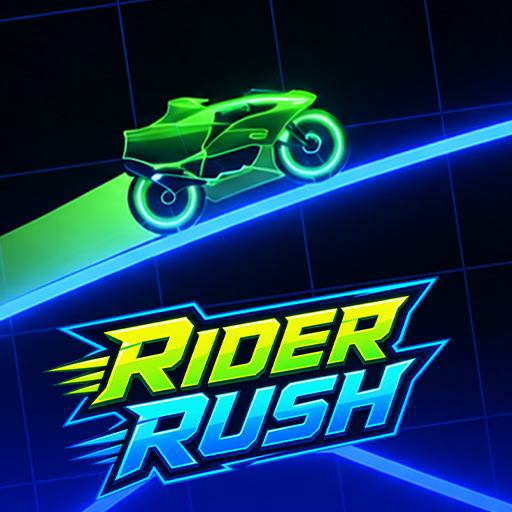
Rider Rush
Rider Rush Mods Game
Sprunki Phase 9 Ggtp
Rooster Road
Please Do Not Feed The Sprunki Brud
Endacopia

Basketball Hit
Flying Car Game Police Games
My Talking Tom Cat But With Oren
Park Fever

Goalheads Io
Flip Or Fail
Classic Sudoku Puzzle
Skillful Finger
Tomb Of The Mask Neon
Boboiboy Galaxy Run

Sprunki Footlongs Sandbox
Hamster Maze
Blobade
Flip Duel
Wheely 2
Obby Tower


How To Play Rider Rush
At its core, Rider Rush centers on three fundamental mechanics: velocity control, mid-air maneuvering, and hue alignment. To truly excel, players must weave these aspects together with fluid precision.
The first pillar is mastering your speed, and it cannot be overstated. The radiant circuits are filled with loops, bends, gaps, and sharp climbs that all depend on sustained momentum. Riders need to press down on the throttle and generate ample velocity in order to clear these obstacles. At the same time, keeping the accelerator held down for an extended stretch is a dangerous move. When traveling too quickly, the bike becomes noticeably harder to handle—especially in sections where the track's color is about to change. The smart approach is to accelerate with purpose and release the throttle when needed, so that the machine remains steady and under control.
Aerial control stands as the second essential ingredient. Once the bike departs from the track, players can employ the rotation controls to execute forward flips, backward flips, or simply fine-tune the angle at which they land. These actions are quite valuable for making sure that the vehicle lines up with the surface it is about to hit. However, performing stunts is only advisable when circumstances are favorable. Spinning without any clear purpose often leads to clumsy touchdowns and even serious wrecks. The rider's primary goal should always be a secure arrival, with both wheels making contact with the asphalt.
The third element, color matching, is both distinctive and non-negotiable. The route ahead is regularly painted in different shades, and the player's bike must mirror the color of the surface before riding across it. This demands quick reflexes and spot-on timing, particularly when traveling at top speed or when differently colored sections are bunched very closely together. A failure to match the color causes an instant crash. Therefore, the rider must continuously keep an eye on the upcoming road and switch to the appropriate color at the precise moment.
Finally, progress is achieved through dedicated practice. Later stages bring trickier course layouts that test sharp abilities and exactness. It is highly likely that players will fail again and again at the same difficult section. This is simply part of the learning journey. By repeatedly training, players can merge throttle control, rotation, and color switching into a smoother overall performance. In time, even the most demanding neon tracks can be beaten and mastered.
Rider Rush Wiki
Rider Rush: A Precision Neon Motorbike Adventure
Summary
Rider Rush delivers a high-velocity online 2D motorbike platforming experience, placing gamers behind the handlebars of a streamlined motorcycle as they navigate winding, color-transforming neon circuits. The primary goal is straightforward: get to the finish line. Yet the route itself is anything but easy. Tracks are packed with loops, sharp bends, gaps, steep inclines, and sudden obstacles that appear without warning. Success depends on exact driving, thoughtful throttle control, and a sharp understanding of the game's color-based mechanics. Every jump, touchdown, and hue shift must be executed with precise timing. One misstep can instantly bring the run to a halt. The title rewards those who can merge velocity with restraint and who develop the ability to anticipate the course ahead. As difficulty ramps up and layouts become more intricate, Rider Rush provides a demanding experience tailored to fans of skill-driven arcade racing and platforming.
Key Features
Rider Rush distinguishes itself through a blend of rapid action and exacting gameplay systems. Its standout characteristics include:
- High-Speed 2D Motorbike Action: The experience is centered on instantaneous reactions and seamless handling. Players guide a sleek bike through a side-scrolling setting where hesitation is not an option.
- Color-Dynamic Neon Circuits: The routes are visually impressive, featuring luminous surfaces that shift hue. This visual effect is far more than decoration; it forms a central gameplay pillar. Riders must align their motorcycle's color with the track to continue safely.
- Varied Track Components: Loops, turns, chasms, and steep grades appear regularly. These features force players to generate and regulate momentum with care. The stage design keeps players engaged by introducing fresh challenges at every turn.
- In-Air Trick Mechanics: While off the ground, players can tilt the bike to execute flips or fine-tune the angle of descent. This introduces an additional layer of skill and flair, but also introduces risk. Pulling off stunts feels rewarding, yet caution should always take priority.
- Escalating Challenge: The experience begins with relatively simple courses and gradually introduces more complicated configurations. This creates a learning curve that continually tests coordination and accuracy as players progress.
- Immediate Failure with High Consequences: A single error can terminate a run. This generates a tense, high-stakes environment that appeals to those who thrive on demanding arcade gameplay. It also inspires mastery and persistent retries.
- Instant Online Play: Since Rider Rush is an online title, it runs directly within a web browser, allowing players to start racing with minimal effort. This convenience suits short gaming breaks as well as extended training sessions.
Precautions/Tips
Achieving success in Rider Rush demands more than quick reflexes; strategy and careful judgment are equally essential. The following advice can help players refine their performance and steer clear of frequent mistakes.
- Avoid Excessive Acceleration: Speed is necessary for clearing loops and gaps, but too much throttle can render the bike difficult to control. Practice modulating the accelerator. Release it when approaching tight corners, color transitions, or zones where precision outweighs raw momentum.
- Focus on Safe Touchdowns: Performing flips and tricks in midair is tempting, but it carries considerable risk. Attempt such maneuvers only when you are certain that sufficient airtime exists and the landing zone is unobstructed. When unsure, use the rotation controls simply to orient the bike correctly. A secure landing is always preferable to a spectacular crash.
- Spot Color Shifts Quickly: The color-alignment mechanic relies on anticipation. Continuously scan the track ahead for its current shade. When a change is visible, adjust your bike's color without delay. Waiting until the last instant can produce errors, particularly at elevated speeds.
- Maintain Composure in Hard Sections: Certain courses may feel impossible at first glance. Do not allow frustration to take over. Repeated failures are an inherent part of the learning process. Pause to examine the course layout, identify where threats are located, and then retry with a more focused plan.
- Weigh Danger Against Reward: Although stunts can provide a sense of accomplishment, they are never mandatory for progress. Concentrate on finishing the route safely. Save advanced tricks for moments when you have fully grasped the fundamentals and possess strong knowledge of the course.
- Train with Regularity: The game rewards muscle memory. The more time you invest, the more adept you become at synchronizing speed, rotation, and color adjustments. If a particular level is causing difficulty, keep replaying it. Your abilities will improve, and the stage will eventually become conquerable.
- Beware of Mixed-Color Zones: Some sections feature multiple hues in close proximity. These areas are especially hazardous. Reduce speed when necessary and execute color changes with exactness. Shedding a bit of velocity is far better than crashing and having to start over.
In closing, Rider Rush is a challenging yet satisfying game that measures players' precision, reaction speed, and tactical foresight. By perfecting throttle management, aerial positioning, and color synchronization, players can traverse its hazardous neon courses and enjoy the excitement of overcoming progressively tougher obstacles. Whether you are a casual player seeking a brief challenge or a devoted enthusiast in search of a demanding skill-based title, Rider Rush presents an absorbing experience that values persistent effort and exact execution.
Rider Rush Frequently Asked Questions
Q: What exactly is Rider Rush?
A: Rider Rush is a high-speed 2D motorbike platformer playable online. It challenges you to navigate twisting, neon-lit tracks that constantly shift in color while avoiding various obstacles, all with the goal of reaching the finish line without incident.
Q: What is the core goal in Rider Rush?
A: The primary objective is to successfully traverse every jump, loop, incline, and unexpected obstacle on the track, ultimately arriving at the finish line without overturning, hitting a hazard, or committing any error that immediately terminates your attempt.
Q: Why does precision matter so much in Rider Rush?
A: The margin for error is extremely small. You need to carefully manage the motorcycle's velocity and momentum, time your color switches with exact accuracy, execute stunts when appropriate, and progress through increasingly complex neon courses. Even one small slip can result in instant failure.
Q: What is the best approach for dealing with loops, bends, gaps, and steep descents?
A: You should accelerate to generate enough momentum to conquer these features, but avoid holding down the throttle for longer than necessary. Excessive speed reduces your control over the bike, particularly in segments where multiple color zones intersect.
Q: How do you control the bike while in the air in Rider Rush?
A: When you are airborne, utilize the rotation functions to perform frontflips, backflips, or adjust the angle at which you touch down. It is wiser to prioritize stable landings, ensuring both tires connect with the track, rather than spinning endlessly just to show off.
Q: Why is color matching necessary in Rider Rush?
A: The upcoming section of the track changes color, requiring you to set your bike to match the surface you are about to ride on. Quick and precise reactions are essential, especially when traveling at high speed or when differently colored sections are positioned very near one another.
Q: What is the outcome of crashing or flipping over?
A: If you crash, overturn, or make any similar error, your run can be brought to an abrupt halt.