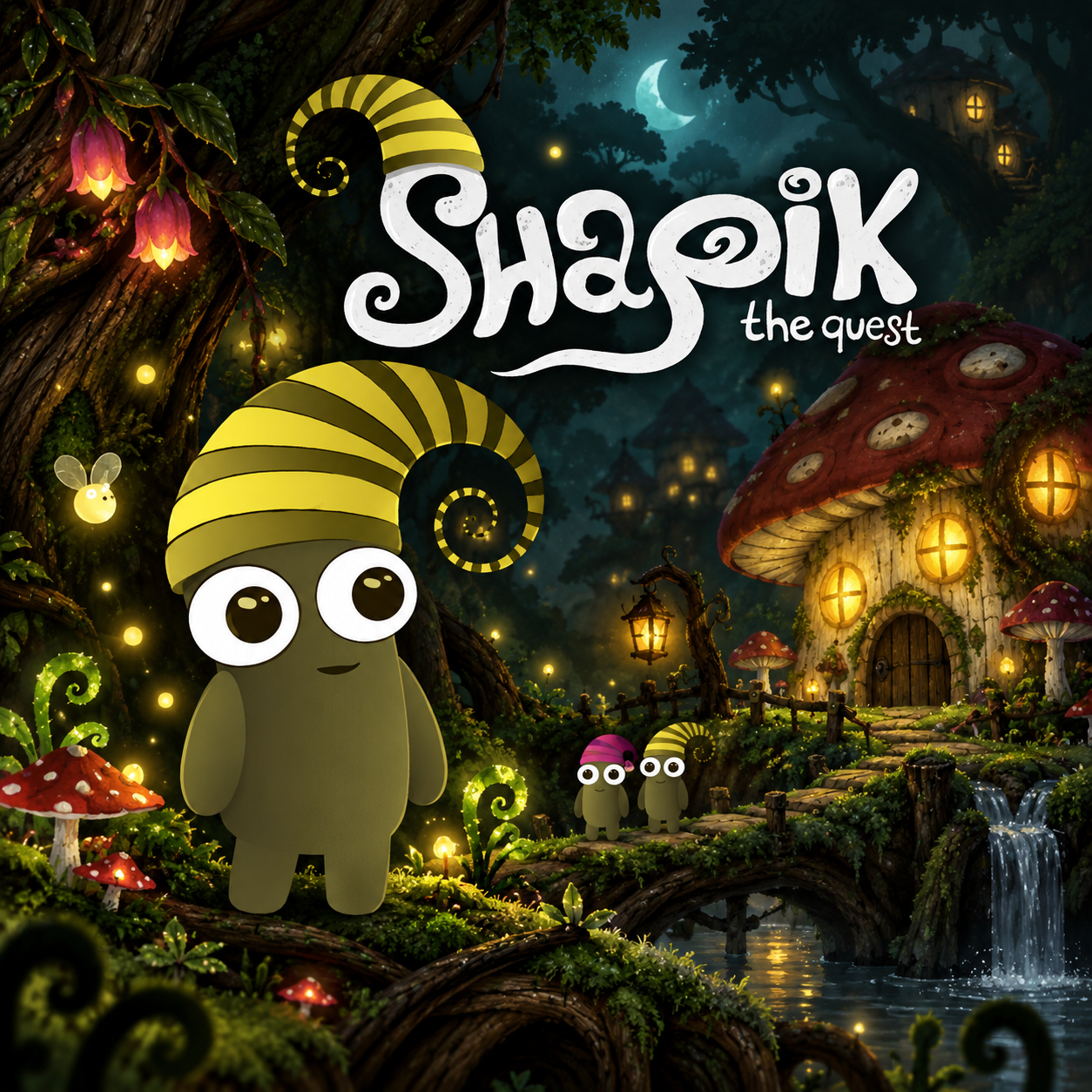
Shapik The Quest
Shapik The Quest Mods Game
Do Dragons Exist
Goat Rampage

Tower Rise
Horror Nun 2
Sprunki Square Shifted

Obby Survive Parkour
Bees Empire Clicker

Paint Or Hunt

Super Bear Adventure
Brave Squad
Sprunki Hyper Shifted Phase 3 Remastered

Left Or Right Spranki Beats

1 Speed Keyboard Lucky Escape

Traffic Racing

Rider Rush
Sprunki Phase 9 Ggtp

Rooster Road

Please Do Not Feed The Sprunki Brud
Endacopia

Basketball Hit


How To Play Shapik The Quest
The basic controls of Shapik The Quest are straightforward to pick up, but true proficiency calls for deliberate planning and tactical thinking. At the start, a player moves the protagonist by left-clicking a destination within the current scene. Once Shapik has reached the desired spot, the same mouse click can be used to manipulate objects, examine items, or talk to the many characters found around the environment. On compatible touch displays, a simple tap performs the identical action, which keeps the experience fully functional on tablets and smartphones.
Very few riddles in the game can be resolved through one isolated action. Instead, the majority demand a chain of logically linked steps. For example, a common solution may require discovering a crucial object in one section, determining where that object should be placed in a different part of the setting, and then triggering a device that ultimately clears the route ahead. Such an interconnected structure encourages players to remain patient and to observe every detail with care.
A particularly vital gameplay element involves working together with the bee companion. This insect is far more than a charming visual addition; it serves as an indispensable instrument for advancement. Numerous locations remain completely inaccessible to Shapik because of their elevation or remoteness. Whenever the hero seems incapable of finishing a task on his own, the player should glance upward and evaluate whether the bee might reach a high platform, activate a far-off switch, or collect an object from a spot that is otherwise out of reach. Deciding the right moment to alternate between guiding Shapik and directing the bee is essential to overcoming many of the game's obstacles.
Reading visual hints is another core component of the experience. The title seldom offers explicit guidance, so players have to interpret the world around them. Useful clues can be hidden in the layout of the scenery, the direction in which a character is looking, the color of a particular object, or a marking carved into a wall. Paying close attention to any change that follows an action is crucial, because even a slight animation adjustment or a faint audio signal may reveal that meaningful progress has occurred or that a fresh possibility has opened up.
Most importantly, mindless clicking across the screen should be avoided. The best strategy is to begin by surveying every interactive element in the area, then reflect on how those elements could sensibly connect with one another. When a clear plan is established before taking action, solving the puzzles becomes considerably more rewarding and effective.
Shapik The Quest Wiki
Summary
Shapik: The Quest is a meticulously designed point-and-click adventure in which players assume control of a tiny, resolute protagonist on a touching journey to locate his lost sister. With a devoted and clever bee at his side, Shapik travels across a charming, hand-illustrated realm filled with odd inhabitants, old mechanical devices, and carefully concealed objects. What sets this title apart is its dedication to visual narration: there are no extended conversations or text-heavy instructions. Rather, the plot is conveyed through expressive motion, subtle character movements, color palettes, and symbolic elements within the environment. This design choice keeps the experience inviting and absorbing, enabling players to deduce the storyline and recognize their goals through careful observation and natural curiosity.
The browser edition of Shapik: The Quest includes nine separate stages, each offering a distinct obstacle that demands more than mere clicking. Players must unblock pathways, restore broken equipment, help unusual characters, and alter the surroundings in order to advance. Every stage functions as an independent puzzle environment, promoting thorough exploration and reasoned problem-solving. The tranquil mood, together with the complete absence of time constraints, makes Shapik: The Quest a perfect choice for those who appreciate contemplative, atmospheric gaming rather than quick, action-oriented play.
Key Features
Shapik: The Quest is notable for its unique visual style and refined execution. The hand-drawn backdrops are full of character, with each stage possessing its own particular mood. Verdant vegetation, creaking footbridges, unusual devices, and eccentric animals are not simple decorative elements; they are essential components of the puzzle mechanics. This smooth integration of artwork and gameplay produces a world that feels dynamic and meaningful.
The storytelling method is another essential aspect. By deciding to convey the narrative without spoken or written dialogue, the creators have made an experience that crosses language barriers and lets players concentrate on visual interpretation. The lack of text gives the journey a calm, enigmatic atmosphere, while the expressive character animations preserve the emotional bond with Shapik and his mission.
The music also enriches the adventure. Gentle, tuneful melodies accompany players during the entire expedition, supporting the unhurried rhythm of the game. There is no clock, no losing condition, and no need to hurry. This serene environment encourages players to linger in each scene, examine every detail, and slowly work out the reasoning behind each puzzle. The game trusts the player's intellect and values attentive observation over quick reactions.
In Shapik The Quest, the controls are refreshingly straightforward. A single left mouse button handles nearly every action, including movement, examination, selection, and interaction. This minimal control system makes the game easy to approach for beginners while still offering sufficient depth for experienced adventure fans. Touchscreen compatibility also guarantees a smooth transition between desktop and mobile devices, preserving the same intuitive feel across different platforms.
Precautions/Tips
For those unfamiliar with the game, several useful suggestions can greatly improve the experience and avoid irritation. First, avoid the temptation to click without purpose. Shapik: The Quest is a puzzle-driven adventure, and every element exists for a reason. Haphazard clicking might occasionally uncover a hidden item, but it is much more productive to stop, study the scene, and think about how the various components might be connected.
Keeping an eye on the bee is crucial. If Shapik cannot reach a certain object or a puzzle appears unsolvable from his current location, the bee is very likely an essential part of the answer. Always examine the upper portions of the screen, since many important items and triggers are positioned above ground level specifically to require the bee's help.
Another useful habit is to observe the results of every action. The game indicates progress through subtle visual cues. A character's face might change, a small gear might turn, a lamp might illuminate, or a faint noise might be heard. These signals are not accidental; they are the game's method of directing the player toward the next appropriate step. By remaining attentive, players can often resolve puzzles without ever feeling confused.
Finally, keep in mind that there is no deadline. The main advantage of Shapik: The Quest is its unhurried pace. Do not move through the stages too quickly. Spend time appreciating the hand-drawn artwork, listening to the soothing music, and fully experiencing the atmosphere. A patient and observant approach will always be rewarded in this charming journey.
Shapik The Quest Frequently Asked Questions
Q: What is Shapik: The Quest?
A: Shapik The Quest is a point-and-click adventure game centered on a tiny protagonist in search of his lost sister. With a loyal bee at his side, Shapik travels through an enchanted realm populated by strange beings, concealed items, and intricate mechanical challenges.
Q: What is the main story of the game?
A: The central narrative follows Shapik, a diminutive hero on a mission to locate his vanished sibling. A supportive bee accompanies him during his journey across a magical domain, helping him overcome obstacles along the way.
Q: How is the story told in Shapik: The Quest?
A: Rather than relying on lengthy dialogues, the game conveys its tale through animated sequences, facial expressions, and symbolic imagery. This approach keeps the adventure straightforward to follow while retaining an air of enigma and wonder.
Q: How many levels are in the browser version?
A: The browser edition contains nine distinct stages, each offering a new area to explore and a fresh set of challenges to overcome.
Q: What kinds of challenges appear in each level?
A: Every setting introduces a fresh obstacle, whether it involves clearing a blocked route, fixing a broken device, or assisting a resident of the world. The tasks vary enough to keep the experience engaging.
Q: What are the basic controls?
A: Players can use the left mouse button to move, examine objects, choose characters, and resolve puzzles. On touchscreen devices that are supported, tapping performs the same actions with equal ease.
Q: How do I move Shapik and interact with the world?
A: To move Shapik, click on a desired spot; then engage with items and characters in the vicinity. Most puzzles demand a sequence of linked actions, so careful observation is essential.
Q: What role does the bee play?
A: The bee is able to access locations that are too elevated or distant for Shapik. Whenever the hero cannot manage a task alone, search for objects positioned above ground level, as the bee may be the only way to reach them.
Q: How should I approach solving puzzles?
A: It is wise to avoid random clicking. Start by identifying which objects can be interacted with, then think about how they might connect. You may need to locate an item, determine its proper place, and trigger a mechanism before the route becomes accessible.
Q: What visual clues should I look for?
A: Hints frequently appear in the environment, character movements, colors, or icons. Pay attention to any modifications that occur after an action, since even a minor animation can indicate the next move.
Q: Why is it important to watch what changes after each action?
A: Observing the scene after each action matters because a subtle animation may reveal the following step. Noticing these shifts helps you understand the intended solution and prevents you from getting stuck.
Q: What makes the game’s environments special?
A: The hand-drawn backdrops give each level its own character. Vegetation, walkways, machinery, and odd creatures are not merely ornamental; they frequently play a functional role in the puzzles and contribute to the atmosphere.
Q: Does the game use dialogue or text-heavy storytelling?
A: No, the game avoids text-heavy storytelling. Instead, the plot is communicated through animations, expressions, and visual symbols, allowing players to interpret the world without reading long passages.
Q: What is the overall pace of the game?
A: Thanks to soothing music and dialogue-free narrative, the game maintains a relaxed tempo. There is no pressure to hurry, allowing players to carefully examine every scene and interpret its hints at their own speed.
Q: Are background objects just decorative?
A: No, they are not simply decorative. Plants, bridges, machines, and strange creatures often become part of the puzzle, even if their purpose is not obvious at first glance. Careful inspection of the scenery is often rewarded.